Tree-planting robots can place seedlings across rough ground while reducing some of the physical work that slows reforestation crews. Their value depends on more than planting speed: soil condition, seedling survival, machine access, and follow-up care decide whether the work lasts.
Quick read:
- Robots can repeat planting tasks across large sites with less manual digging.
- Cameras, positioning systems, and planting tools can help place each seedling at a planned location.
- Dry soil, steep ground, poor access, and weak aftercare can erase the benefit.
Where the robots help
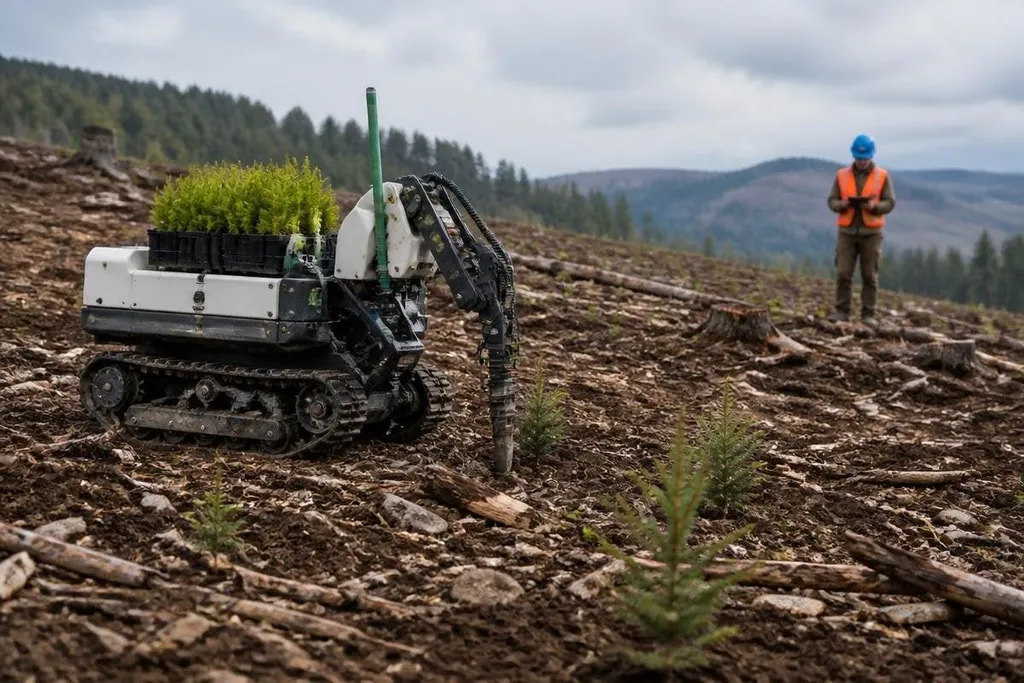
A tree-planting robot usually combines a moving platform with a planting tool, a supply of seedlings, and software that controls where each plant goes.
The tool opens a hole, places the seedling, and closes soil around its roots. The exact process depends on the machine design.
That repeatable motion can reduce lifting, walking, and digging for human crews. It may also help teams work in places where planting by hand would take longer or expose workers to heat, uneven ground, or long stretches without vehicle access.
Some systems can use cameras, positioning sensors, or mapped routes to space seedlings according to a plan. Spacing matters because young trees compete for water, light, and nutrients as they grow. Following a clear planting map can make the layout easier to check later.
The machine can also record where it planted. That location data may help teams return to inspect seedlings, water them, replace failed plants, or measure survival across different parts of a site. Records are useful only when crews keep them accurate and act on them.
Planting speed means little without soil type, slope, and the work left for crews. A buyer can use tree-planting robotics reports to check those details against each machine’s field result before looking at the ground limits.
The limits start with the ground
Tree-planting robots work best when the site matches their size, traction, reach, and planting method. Rocky soil can block a planting tool. Dense roots can slow the machine. Steep slopes can limit movement or create a safety risk, especially for a wheeled platform.
Access creates another problem. A robot still needs to reach the planting area, carry seedlings, and receive power or fuel. If a support vehicle cannot reach the site, workers may spend much of the day moving supplies by hand.
Weather also changes the task. Wet ground can damage soil structure and reduce traction. Dry ground can make digging harder and leave new roots short of water. Correct placement does not give the seedling the conditions it needs to live.
The planting tool needs careful adjustment too. A hole that is too shallow can leave roots exposed. A hole that is too deep can place the root system below the level where it can grow well. Soil packed too tightly around the seedling can restrict water and air movement.
The main risk is confusing planting with restoration
A planted seedling is an early step, not a finished forest. Aftercare may include watering, weed control, protection from animals, and checks after storms or heat. The need for that work does not disappear when a machine does the planting.
Robot fleets can also create new costs. Operators need training, spare parts, transport plans, software support, and a method for handling faults. A breakdown in a remote area can leave workers waiting for a repair while the planting window narrows.
There is a wider planning risk. A machine may make it easier to plant large numbers of trees, yet the wrong species or poor site planning can weaken the result. Local climate, soil, existing plants, and water supply should guide the planting plan before a robot arrives.
The machine can also disturb the site through its weight and repeated travel. Tire tracks may compact soil or damage nearby plants. A smaller machine may reduce that risk, but it may carry fewer seedlings or need more trips.
A practical buying and planning check
Before choosing a tree-planting robot, check these points:
- Site shape: Confirm the machine can travel safely across the slope, soil, and surface conditions.
- Planting method: Check hole depth, root handling, soil closure, and the range of seedling sizes it can accept.
- Supply work: Plan how seedlings, water, power, fuel, and spare parts reach the site.
- Data records: Confirm that planting locations can be saved, checked, and used for later visits.
- Aftercare plan: Set out who will inspect, water, protect, and replace seedlings after planting.
- Success measure: Track seedling survival and site health rather than counting planted trees alone.
I'd use a tree-planting robot when it reduces hard travel and repeat digging on a suitable site, with people still responsible for site choice and care. The useful test is not how many seedlings the machine places in a day. It is how many remain healthy after the first dry season.